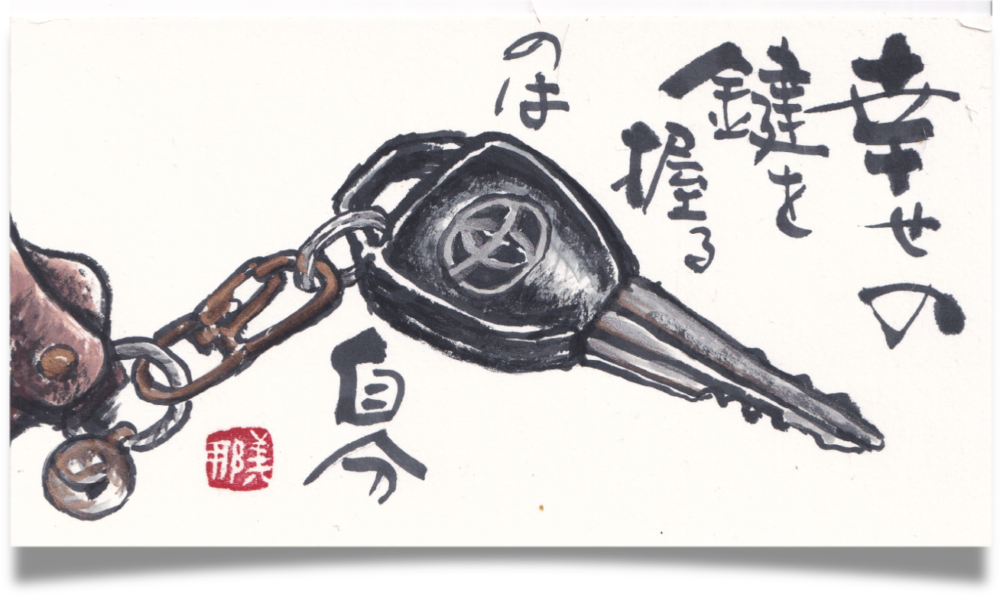
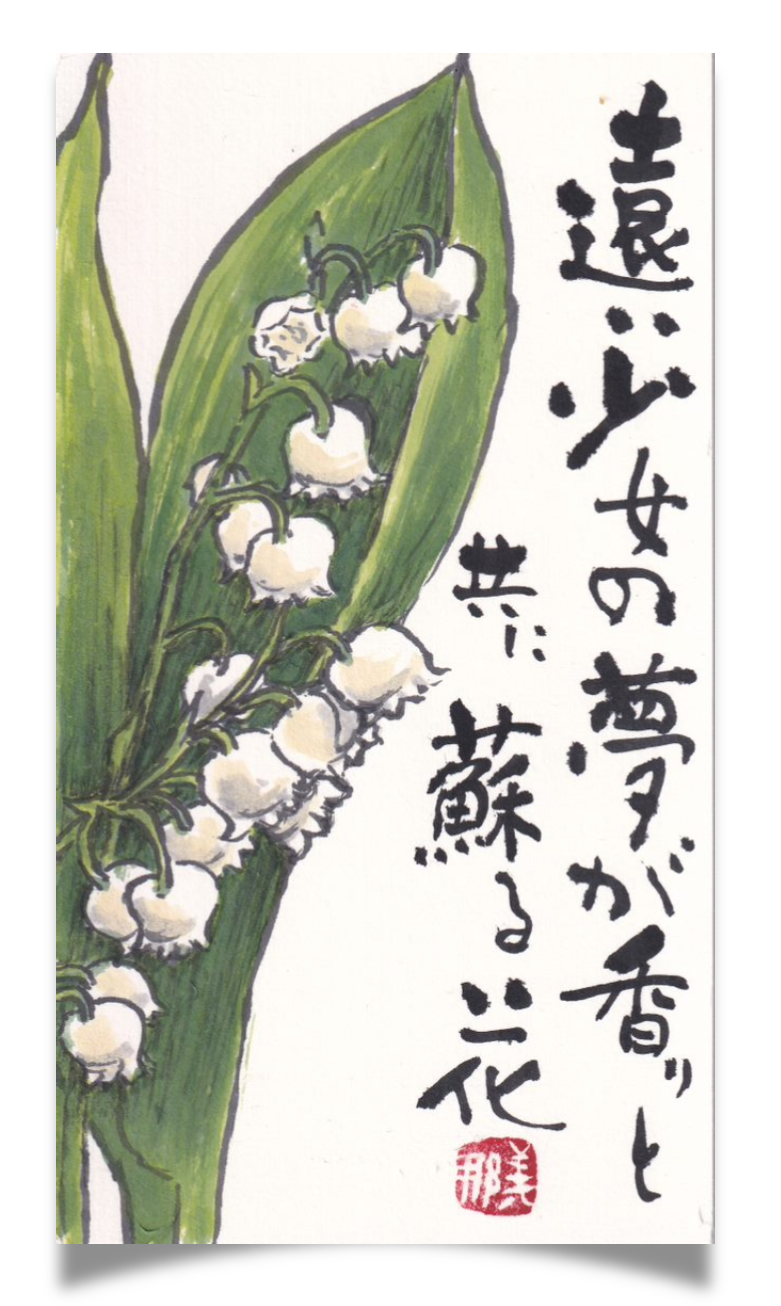
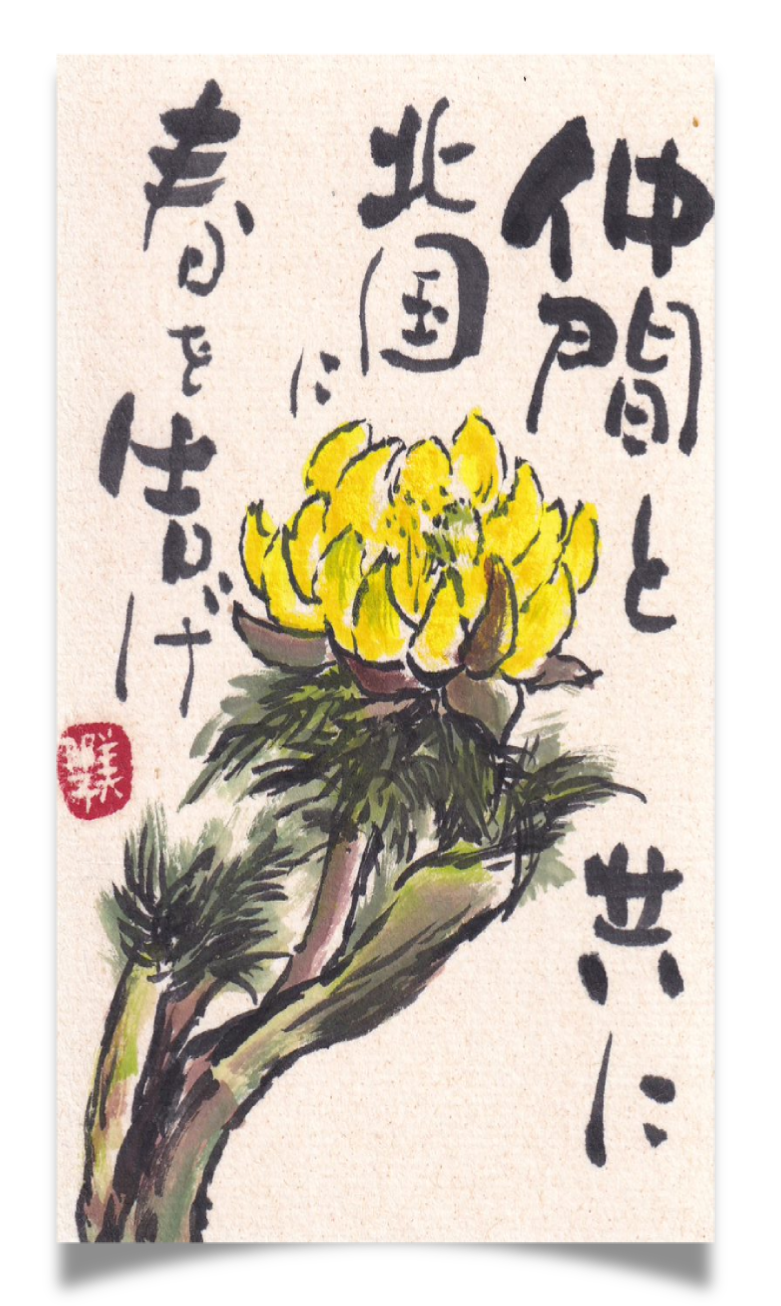
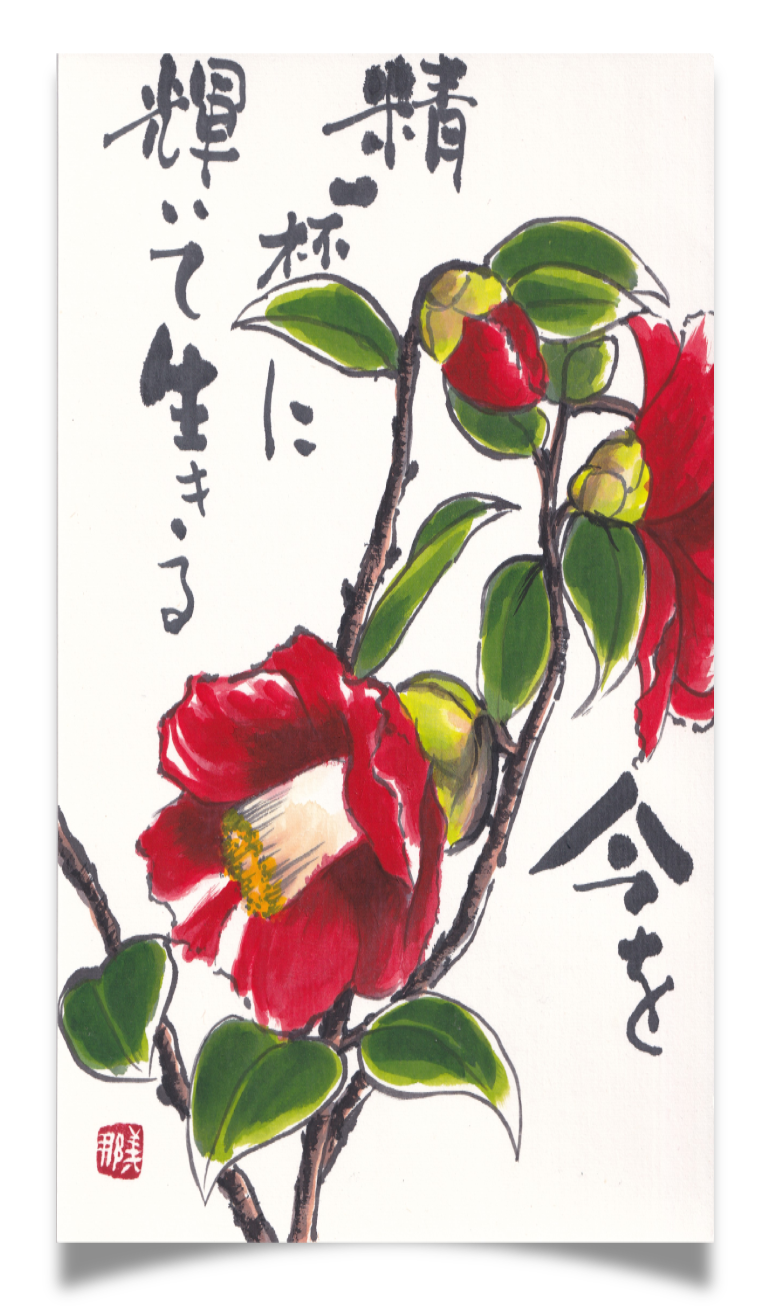
絵のある手紙、その先へ
01 · HISTORY
絵をかき、短い言葉を添えて、誰かに送る。小さなやりとりから始まる絵手紙の歴史は、一人の作家だけでは語りきれません。今日の絵手紙運動より前にも、日本の作家や画家たちは絵を添えた手紙を交わしていました。日本絵手紙協会は、その例として夏目漱石、岡本一平、會津八一を挙げています。小池邦夫の功績は、こうした表現を誰もが親しめる絵手紙として育て、広めたところにあります。日本絵手紙協会
手紙に絵を添える昔からの楽しみと、かいて送り合う仲間が広がっていった現代の歩み。その両方を見つめると、絵手紙の歴史が少し豊かに見えてきます。
Before the modern movement
A picture, a few words, someone to send them to. Etegami begins with a small exchange, but its history reaches beyond any single artist. Long before the modern movement, Japanese writers and artists were making illustrated correspondence. The Japan Etegami Association names Natsume Sōseki, Ippei Okamoto and Yaichi Aizu among these earlier postcard writers. It places Kunio Koike’s contribution in developing an approach that ordinary people could readily make their own. Japan Etegami Association
That distinction leaves room for both histories: the older pleasure of putting pictures into letters, and the modern communities that grew around making and sending etegami.
自分の言葉を探して
02 · HISTORY
小池邦夫(1941–2023)は松山に生まれ、東京学芸大学で書を学びました。狛江市の年譜では、学生時代からの友人、正岡千年への手紙を書き始めた年を1961年としています。協会の小池邦夫略歴、狛江市の年譜
後年の回想によると、臨書を重ねる授業の中で、小池は自分自身を表す方法を探していました。気持ちを分かってくれる友人への手紙なら、思うままに語れる。19歳から、読んだ本や展覧会、芸術への思いを日々書き送りました。最初は文字だけで、絵を添え始めたのは24歳ごろだったといいます。今につながる絵手紙の形は、文通の中で少しずつ育っていきました。最初の手紙についての回想、絵を添え始めたころ
Finding a voice
Kunio Koike (小池邦夫, 1941–2023) was born in Matsuyama and studied calligraphy at Tokyo Gakugei University. Komae City’s chronology dates the beginning of his correspondence with school friend Sennen Masaoka (正岡千年) to 1961. Association biography, Komae chronology
In later recollections, Koike described feeling restless with lessons devoted to copying calligraphic models. Writing to a trusted friend gave him somewhere to speak for himself. At nineteen, he began daily letters about books, exhibitions and his hopes for art. Those first letters contained only words. He recalled adding drawings around the age of twenty-four. The familiar picture-letter form emerged gradually from that correspondence. Koike on his first letters, Koike on adding pictures
受け止めてくれる人、道を示してくれる人
03 · HISTORY
正岡は、小池の手紙を丁寧に読み、率直に励ます友人でした。小池自身が失敗と思う作品にも、その人らしい飾らなさを見いだしてくれたといいます。正岡千年についての回想
正岡は手紙を保存し、その一部をまとめた『邦夫ノート』は、1967年、小池の結婚式の引き出物として友人たちの協力で80部制作されました。個人的な文通を大切に受け止める人が、すでに周りにいたのです。『邦夫ノート』のこと
年長の芸術家との出会いも大きな支えでした。小池邦夫絵手紙美術館は、作家の瀧井孝作と画家の中川一政を、生涯の師として紹介しています。また小池は、作家であり絵もかいた武者小路実篤を心の師とし、その作品から絵をかく勇気を得たと語っています。絵手紙へと向かう表現を育てた人々です。美術館の紹介、武者小路実篤についての回想
こうしてたどると、手紙を受け取る側も歴史の一部だと分かります。大切に残し、かいた人を励ます。その存在が、次の一通を支えていました。
Friends and influences
Masaoka was an attentive reader and candid encourager. Koike remembered his friend finding honesty in the work he considered unsuccessful. Koike on Masaoka
Masaoka also preserved the letters. In 1967, friends produced eighty copies of a selection, the Kunio Notebook, for distribution at Koike’s wedding. A private exchange already had people willing to care for it. The Kunio Notebook
Other influences came from older artists. Koike’s museum identifies the writer Kōsaku Takii and painter Kazumasa Nakagawa as formative mentors. Koike himself described novelist and artist Saneatsu Mushanokōji as a lifelong spiritual mentor, whose work encouraged his own drawing. Their place in this story is as artistic influences. Museum biography, Koike on Mushanokōji
Together, these stories make the receiver part of the history, too: someone to keep a letter, encourage its maker, and make the next one possible.
六万枚を、一枚ずつ
04 · HISTORY
1977年の小池の個展を訪れた『銀花』編集長の細井冨貴子は、雑誌一冊ごとに肉筆のはがきを一枚入れる企画を提案しました。狛江市の改訂版冊子によると、制作は1977年11月に始まり、1978年11月17日に6万枚に達しました。狛江市の冊子、18–21頁
読者の手に渡ったのは、1979年2月発売の『銀花』春号です。略歴では1978年の出来事として紹介されることもありますが、制作と刊行を分けると、その流れが分かります。刊行についての記録、協会の略歴
心に残るのは、その枚数だけではありません。一人ひとりの読者に、手でかいた一枚が届いたこと。編集者の関心が、個人の表現を広く届ける道を開きました。
Sixty thousand originals
After visiting Koike’s 1977 exhibition, Ginka editor 細井冨貴子 proposed an ambitious project: an original card for every copy of an issue. Komae’s revised biography records work beginning in November 1977 and reaching 60,000 cards on 17 November 1978. Komae biography, pp. 18–21
The cards reached readers in Ginka’s spring 1979 issue, released that February. Short biographies often attach the breakthrough to 1978; separating the making from publication clarifies the sequence. Publication account, Association biography
The remarkable number is only part of the story. Each reader received something made by hand, and an editor’s interest had helped bring a personal practice to a much wider audience.
郵便局が教室になった日
05 · HISTORY
1981年7月23日、小池は狛江郵便局で絵手紙を教えました。狛江市は、これを日本で初めての絵手紙教室と位置づけています。「絵手紙発祥の地」という呼び名も、この教室に由来します。狛江市のメモリアルポスト紹介
小池の回想では、親子教室に集まったのは90人。初めて筆を持つような人たちが楽しむ姿に心を動かされ、その後も郵便局で教室や講座が続きました。最初の教室についての回想
狛江と絵手紙のつながりは、教室の外へも続いています。2020年に始まった「狛江市まるごと美術館」では、市の施設や駅、街路にも絵手紙を展示。いつもの道を歩く中でも、作品に出会えるようになりました。狛江のまちと絵手紙
A post office becomes a classroom
On 23 July 1981, Koike taught at Komae Post Office. Komae City identifies this as Japan’s first etegami class, the event behind its description of itself as etegami’s birthplace. Komae’s memorial-post account
Koike recalled ninety participants at the parent-and-child session. Seeing beginners enjoy the brush moved him; the post office continued holding classes and talks. Koike on the class
Komae’s connection has continued beyond the classroom. Since 2020, its citywide museum project has brought etegami into public buildings, the station and the streets, making encounters with the work part of everyday journeys. Etegami in Komae
広がりを支えた人たち
06 · HISTORY
日本絵手紙協会が発足したのは、1985年1月です。協会概要
初期の実践者、尾身七重の姿も、多くの人の背中を押しました。小池に勧められ、一年間、毎日絵手紙を送った尾身。その365日の取り組みがテレビで紹介されると、自分も始めたいという問い合わせが寄せられたと小池は語っています。庭の花や台所の野菜が、身近な画題になりました。尾身七重についての回想
小池恭子は、実際にかいて見せることで、絵手紙の入口を広げました。夫婦で講師を務めた1998年のNHK講座では、邦夫が絵手紙やその考え方を語り、恭子が実技を担当しました。初めの一枚をどうかくか。その姿を視聴者に届けた恭子の役割も、この歴史に欠かせません。NHK講座についての回想
People who helped it grow
The Japan Etegami Association was established in January 1985. Association profile
Early participant Nanae Omi (尾身七重) helped make the practice feel possible for others. Encouraged by Koike, she sent him a picture letter daily for a year. Koike recalled that television coverage of her 365-day effort brought enquiries from people wanting to begin. Her subjects included garden flowers and kitchen vegetables. Koike on Omi
Kyoko Koike (小池恭子) brought a teacher’s practical skill to its wider introduction. In the couple’s 1998 NHK series, she demonstrated the techniques while Kunio discussed the letters and their ideas. Her contribution deserves its own place in the history: viewers could see how to make a first attempt. The NHK series
学ぶ場所が増えていく
07 · HISTORY
学びを支える仕組みも整っていきました。協会の沿革には、1985年の絵手紙友の会の活動開始、1995年の指導者養成講座、1996年の『月刊絵手紙』創刊と通信講座、2000年の公認講師制度、2020年のオンライン講座が記されています。いずれも、協会自身の事業の節目です。日本絵手紙協会の沿革
大学も学びの場の一つになりました。上武大学では、2009年度から澁谷朋子が担当する美術の授業に絵手紙を導入。2014年には手がき文化研究所を設け、授業に加えて、資料の収集、展示、研究へと活動を広げています。上武大学
近くの先生に習う、手紙を通じて学ぶ、教室に通う、オンラインで参加する。続けるための入口が、少しずつ増えてきました。
More ways to learn
Learning gradually acquired a broader support network. The Association’s correspondence circle began in 1985. Its chronology records instructor training from 1995, Monthly Etegami and correspondence courses from 1996, a certified-instructor system from 2000, and online courses from 2020. These are milestones in the Association’s own programmes. Association chronology
University teaching offered another setting. Jobu University credits Tomoko Shibuya (澁谷朋子) with introducing etegami into its art classes in 2009. Its handwriting-culture institute followed in 2014, bringing teaching, collections, exhibitions and research together. Jobu University
Together, these developments gave learners several ways to stay involved, whether through a nearby teacher, correspondence, a classroom or an online lesson.
次の世代の一枚
08 · HISTORY
絵手紙作家の山路智恵は、小学校の入学式の日から小池宛てに絵手紙を送り始めました。美術館の紹介によると、小学6年生で連続2,000日を達成。その後も制作を続け、国内外で個展を開いています。山路智恵絵手紙美術館
子どもたちが絵手紙に出会う機会は、今もあります。日本郵便の2025年「手紙作文コンクール」では、幼児から高校生までを対象とする絵手紙部門に54,274点が寄せられました。これは応募作品の数で、愛好者の人数ではありません。若い世代の参加を知る、具体的な手がかりの一つです。日本郵便・2025年の審査結果
Younger voices
Later-generation artist Tomoe Yamaji (山路智恵) began posting letters to Koike on her first day of primary school. Her museum records 2,000 consecutive days by sixth grade, followed by an artistic career with exhibitions in Japan and abroad. Yamaji museum biography
Children continue to encounter etegami in other ways. Japan Post’s 2025 letter-writing competition received 54,274 entries in its etegami category, open to preschool children through high-school students. That is a count of submitted works, not of individual practitioners. It offers one concrete glimpse of participation by younger makers. Japan Post’s 2025 results
海を越えて届く手紙
09 · HISTORY
国際交流にも、顔の見える小さな実践があります。松戸市とオーストラリアの姉妹都市ホワイトホース市は、2023年度から絵手紙を交換しています。2026年9月の市の報告によると、2026年度は松戸から135枚を送り、ホワイトホースから297枚が届きました。それぞれのまちの魅力を伝える交流です。ホワイトホースから届いた絵手紙は、松戸市内の施設で巡回展示されています。松戸市の交流記録
協会が今も大切にしているのは、かいた絵手紙を送ること。「ヘタでいい ヘタがいい」という言葉には、心を込めた一枚を、その人らしさごと受け止める考え方があります。絵手紙とは
場所や時代が変わっても、何かに目をとめ、誰かを思い浮かべ、一通をかくという関係は続いています。この歴史から次の白いはがきへ持っていけるものは、案外、そんな身近なことなのかもしれません。
Letters across the water
International exchange can also be modest and specific. Matsudo and its Australian sister city, Whitehorse, began exchanging etegami in fiscal 2023. Matsudo’s September 2026 update records that fiscal year’s exchange: 135 cards sent to Whitehorse and 297 received. Participants shared what they valued about their own cities; the incoming cards were being exhibited in Matsudo. Matsudo City
The Association still places sending at the heart of etegami. Its motto, ヘタでいい ヘタがいい, welcomes the unpolished marks of a sincere attempt. What is etegami?
Across these different settings, a simple relationship remains: someone notices something, makes a letter and thinks of another person. Perhaps that is the most useful thread to carry from this history to the next blank card.
一通から、次の一通へOne letter at a time
九つの節目を、カードから開いてお読みください。
Each card opens a focused bilingual story with its sources.